Cult Warning Signs (Checklist)

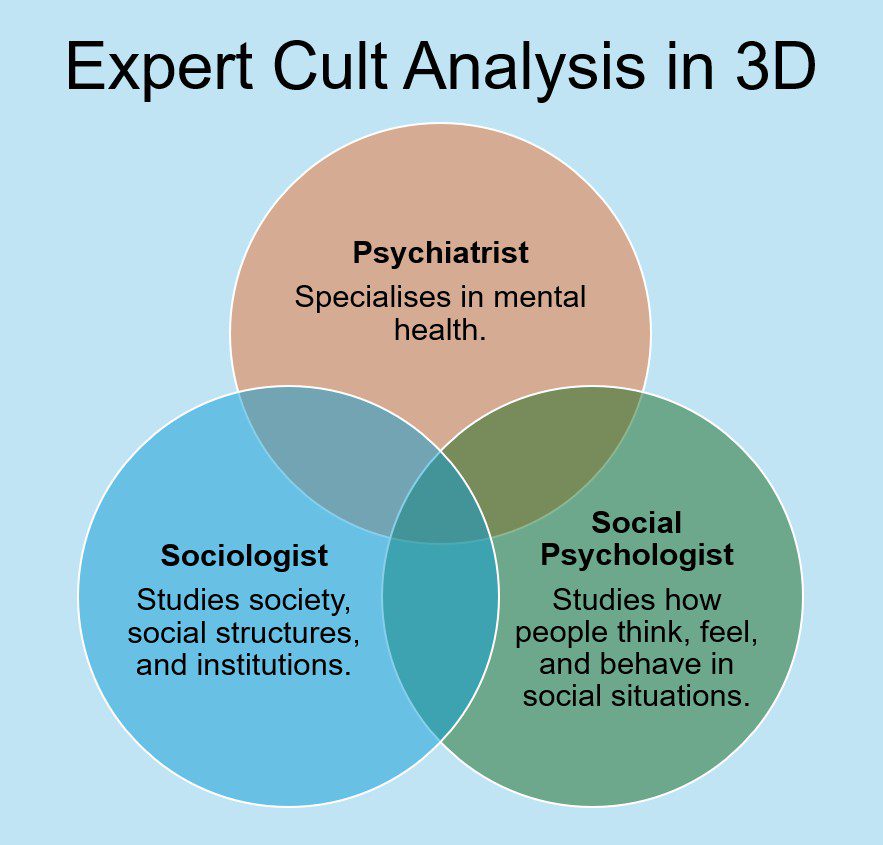
This cult church checklist can be used to examine any church or organisation’s ideology, environmental controls, social structures, and persuasion tactics, to evaluate how cultish they are. It uses insights from 4 top cult experts, each with their own specialism: a top psychiatrist, a clinical psychologist, a sociologist, and a social psychologist, to establish a multi-perspective analysis of the warning signs.
For more information, see our in-depth guide on cult churches by top experts.
Phase 1: Environment and Information (The Lifton Test)
- Does the leadership discourage you from reading outside news, critical websites, or books written by former members?
- Does the group use specialised jargon, acronyms, or repetitive phrases to cut off difficult conversations or doubts?
- Are natural disasters, personal coincidences, or ordinary successes constantly framed as supernatural signs of the group’s favour?
- Are you told that leaving the group will result in a loss of spiritual salvation, personal ruin, or divine punishment?
Phase 2: Psychological Destabilisation (The Singer Test)
- Does the group’s schedule intentionally cause physical exhaustion or keep you too busy to maintain outside relationships?
- Are you expected to completely terminate your critical thinking on entry, and rely entirely on leadership for personal decisions?
- Did the group aggressively target you or change its behaviour toward you during a period of intense personal crisis or vulnerability?
- Are you systematically discouraged or prohibited from speaking with friends, family, or counsellors who criticise the organisation?
Phase 3: Social and Identity Control (The Ofshe Test)
- Are you pressured to publicly denounce your past life, hobbies, career goals, or unaligned family members as bad or sinful?
- Does the group construct environments where your peers continuously analyse, critique, or humiliate you for tiny infractions?
- Do you feel a constant, manufactured loop of guilt that can only be relieved by committing more time, money, or energy to the group?
- Has the organisation historically escalated its demands, becoming increasingly restrictive, insular, and hostile over time?
Phase 4: Everyday Compliance Tactics (The Cialdini Test)
- Did your arrival trigger overwhelming praise and affection (“love bombing”) that now makes you feel deeply indebted to the group?
- Were you led into making small commitments that gradually escalated into huge sacrifices of your time, autonomy, or finances?
- Are you surrounded by a hyper-synchronised community where dissent is invisible, making you feel crazy for having a single doubt?
- Does the group claim that they are the only source of absolute truth on Earth and that your window of opportunity to join them is closing fast?
Scoring the Test:
0–3 Checkboxes: Normal high-commitment organisation. Healthy groups allow for transparency, independent thought, and outside relationships.
4–8 Checkboxes: Moderate concern. The organisation is utilising heavy compliance tactics and psychological pressure. Proceed with caution.
9+ Checkboxes: High cultic risk. The organisation displays a pattern of coercive control, identity manipulation, and structural isolation across all four expert dimensions.
Why understanding cult warning signs is so important
When looking for characteristics of a cult, it is crucial to recognise that high-control groups rarely present themselves as malevolent. Instead, they exploit universal human needs: the desire for community, meaning, and security. This is important to understand because recruitment of new members is normally deceptive; cults do not fully disclose their aims, practices, and beliefs to new potential members.
By looking through the combined lenses of sociology, psychology, and persuasion science, the core traits of a high-control system become clear:
- Infallible Leadership: Power is centralised in a leader or ruling council whose actions are completely beyond scrutiny, question, or accountability.
- Ecosystem Isolation: The group systematically severs a member’s ties to the outside world, labelling family, friends, and independent media as spiritually dangerous or toxic.
- Black-and-White Thinking: The group enforces an uncompromising binary worldview. You are either inside and saved, or outside and condemned.
- Weaponised Psychology: Personal disclosures, confessions, and emotional vulnerabilities shared in confidence are catalogued and used as tools of shame to enforce compliance.
Cult church warning signs video:
Summary:
Experts such as Robert Lifton, Margaret Singer, Richard Ofshe, and Robert Cialdini, the most reliable sign that a group is a cult is the presence of unethically high levels of control across psychological, environmental, informational, social, and identity dimensions. Other pervasive signs of a cult, according to the experts, are:
- A charismatic leader or small group of leaders who have no accountability and are regarded as perfect or divinely guided
- A them and us mentality – people inside are good and are saved, people outside are bad and are lost
- Fear, often enforced through behaviour-based consequences and a strong culture of personal disclosure (confession) to the group leaders